Why Dental Claims Get Delayed & How Technology Solves It
Learn why dental claims are delayed in U.S. practices and how modern technology reduces errors, speeds reimbursements, and improves cash flow.
iCoreConnect

Introduction
In a perfect world, dental claims would be simple: treatment is completed, claims are submitted, and payments arrive on time. But in reality, many U.S. dental practices deal with delayed dental claims, creating a ripple effect that impacts revenue, staff productivity, and most importantly, patient trust.
For patients, delays often mean confusion and unexpected bills. For practices, it means chasing insurance companies, correcting errors, and dealing with cash flow disruptions.
The good news? Most of these delays are not random; they’re predictable, and more importantly, fixable with the right technology.
Let’s understand this through a real-world scenario.
🧾 A Real-Life Scenario: Dr. Daniel Brooks’ Practice
Dr. Daniel Brooks owns a well-established dental clinic in California. His practice is known for quality care, and patient inflow has been consistently strong.
Yet, despite clinical success, his team was facing an operational headache:
Insurance payments were taking 25–40 days
Claims frequently came back for corrections
Patients often called to question their bills
One particular case stood out.
A patient named Mark visited the clinic for a dental crown. Everything seemed smooth:
Insurance eligibility was checked
Treatment was completed
Claim was submitted on the same day
But weeks passed, and no payment.
After reviewing the claim, the issue turned out to be surprisingly small:
👉 The procedure code was correct, but supporting documentation was not attached
This resulted in:
A delayed claim by nearly 3 weeks
Additional back-and-forth with the insurance company
Temporary billing confusion for the patient
This wasn’t a one-off mistake: it was happening across multiple claims every month.
Why Do Dental Claims Get Delayed?
To truly solve the problem, it’s important to understand the root causes behind dental claim delays.
1. Manual Data Entry Errors
In many practices, patient and insurance details are entered manually. Even minor errors—like a typo in a name or policy number—can lead to claim rejections or delays.
2. Missing or Incorrect Clinical Details
Dental claims require precision:
CDT codes
Tooth numbers
Procedure descriptions
Attachments (like X-rays or narratives)
Missing even one element can pause the entire process.
3. Inaccurate Insurance Verification
When eligibility is not verified in real time, practices may:
Submit claims for non-covered procedures
Miscalculate patient responsibility
This leads to rework and delays.
4. Lack of Standardized Workflows
Without a structured billing process:
Claims may be submitted late
Follow-ups may be inconsistent
Errors may go unnoticed
5. Reactive Instead of Proactive Follow-Ups
Many teams wait until a claim is delayed before taking action. By then, valuable time is already lost.
The Patient Impact: More Than Just a Billing Issue
From a patient’s perspective, delayed claims can be frustrating and confusing.
In Mark’s case:
He received a higher-than-expected bill initially
He wasn’t sure if his insurance would cover the procedure
He had to call the clinic multiple times for clarification
Even though the issue was eventually resolved, the experience affected his confidence in the billing process.👉 This is why delayed dental claims are not just an operational issue—they’re a patient experience issue.
How Technology Fixes Delayed Dental Claims
Modern dental practices across the U.S. are now turning to technology to streamline their revenue cycle and eliminate delays.
Here’s how.
1. Real-Time Insurance Verification
Advanced systems instantly verify:
Coverage details
Deductibles
Limitations
This ensures claims are accurate before submission.
2. Automated Error Detection
Technology can scan claims and:
Identify missing fields
Flag incorrect codes
Suggest corrections
This reduces human error significantly.
3. Electronic Claim Submission via Clearinghouses
Instead of manual processes, claims are submitted electronically:
Faster processing
Immediate acknowledgment
Reduced rejection rates
4. Smart Attachment Management
Modern tools ensure:
Required documents are automatically included
Claims are complete before submission
No more delays due to missing X-rays or narratives.
5. Real-Time Tracking and Alerts
Practices can:
Monitor claim status live
Receive alerts for pending or denied claims
Act proactively instead of reactively
6. Automated Follow-Ups
Instead of relying on staff memory, systems:
Trigger follow-ups automatically
Reduce turnaround time
Improve consistency
The Turning Point: Dr. Brooks’ Transformation
After months of dealing with inefficiencies, Dr. Brooks decided to implement a technology-driven billing solution.
The results were noticeable within a short period:
Claim processing time reduced to 12–18 days
First-pass acceptance rates improved significantly
Administrative workload decreased
Patient billing complaints dropped
Most importantly:
👉 His team could shift focus from chasing claims to delivering better patient care.
Why This Matters for U.S. Dental Practices
The U.S. dental insurance landscape is complex and constantly evolving. Practices that rely on outdated or manual systems often face:
Revenue leakage
Increased denials
Staff burnout
Poor patient experience
On the other hand, practices that adopt technology gain:
Faster reimbursements
Higher accuracy
Better operational efficiency
Stronger patient trust
Key Takeaways
Delayed dental claims are usually caused by preventable errors
Manual processes increase the risk of delays
Patients are directly impacted by billing inefficiencies
Technology helps automate, optimize, and accelerate the entire process
Final Thoughts
Delayed claims don’t just slow down payments—they slow down your entire practice.
The difference between a struggling revenue cycle and a smooth one often comes down to one thing:
👉 How effectively you use technology.
By eliminating manual errors, improving visibility, and automating workflows, dental practices can take full control of their billing process.
📞 Contact Us
If your practice is facing challenges with delayed dental claims, frequent denials, or inconsistent cash flow, we’re here to help.
Our U.S.-focused dental billing solutions are designed to:
Reduce claim delays
Improve first-pass acceptance rates
Streamline your revenue cycle
👉 Contact us today and take the first step toward faster, more predictable payments.
Other articles

Dental Claims & RCM
Learn how to process dental insurance claims faster, reduce denials, and get paid consistently with this step-by-step guide from iCore.

Dental Claims & RCM
Learn what features matter most in dental medical billing software and how iCore helps dental practices reduce denials and recover more revenue.
Dental Claims & RCM
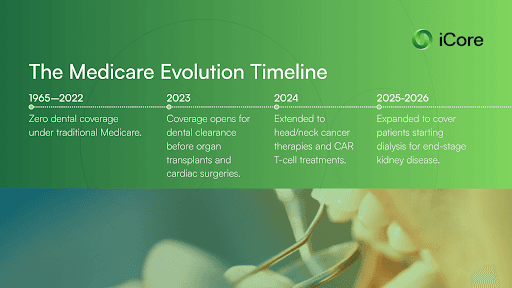
Dental and medical coverage aren't the same — but the line is blurring. Learn when dental becomes medical, how cross-billing works, and how iCore helps practices capture every reimbursement they're owed.

Dental Claims & RCM
Learn how dental billing management systems improve internal workflows, reduce claim delays, and increase practice efficiency. Discover how iCore helps practices streamline operations.
Dental Claims & RCM
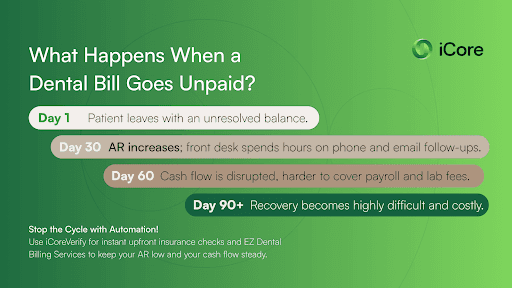
Learn when dental practices should hire billing experts and how iCore helps reduce claim denials, improve cash flow, and streamline revenue cycle management.

Dental Claims & RCM
Learn the most important dental billing laws every practice should understand. Discover compliance tips, real examples, and how iCore helps reduce claim denials and billing risks.