Healthcare Vendor Management: Automation, Security & Compliance | iCore
Learn how healthcare vendor management helps organizations improve security, compliance, and operational efficiency. Discover automation strategies and real-world examples from healthcare providers.
iCoreConnect

Healthcare organizations today depend on an entire ecosystem of external partners to function efficiently. Billing companies handle claims, IT providers maintain systems, software vendors power patient communication platforms, and security partners monitor networks.
For many healthcare administrators, managing these relationships starts off simple. A practice may begin with just a few trusted vendors—perhaps an EHR provider, a billing partner, and an IT support company.
But as the organization grows, the vendor list grows with it.
A dental group expanding from two clinics to ten locations might suddenly find itself coordinating with multiple technology vendors, insurance verification partners, compliance consultants, communication platforms, and cybersecurity providers. Each vendor requires contracts, compliance documentation, system access permissions, and performance monitoring.
Without a structured approach, vendor relationships quickly become difficult to manage.
This is why healthcare vendor management is becoming a critical operational strategy for healthcare organizations across the United States.
Rather than treating vendors as isolated service providers, healthcare organizations are beginning to manage them through centralized systems focused on automation, security, and regulatory compliance.

When Vendor Relationships Become Operational Risk
Many healthcare leaders only begin to recognize the importance of vendor management after encountering operational friction.
Consider a healthcare clinic preparing for a compliance audit. The compliance officer requests documentation showing that every vendor with access to patient information has signed a Business Associate Agreement and meets HIPAA security standards.
What seems like a simple request quickly turns into a scramble.
Some agreements are stored in email threads, others are buried in shared folders, and a few vendors were onboarded years ago without complete compliance documentation. Staff members spend hours tracking down contracts and confirming vendor responsibilities.
The issue isn’t that the organization lacks good vendors. The problem is the absence of a structured system to manage vendor relationships consistently.
Situations like this are common in healthcare environments where operational priorities often shift toward patient care and administrative oversight falls behind.
Healthcare vendor management helps organizations maintain visibility across all vendor relationships, ensuring that operational growth does not create hidden compliance or security risks.
Understanding Healthcare Vendor Management
Healthcare vendor management refers to the structured process of selecting, onboarding, monitoring, and evaluating third-party vendors that support healthcare operations.
These vendors may include:
Electronic health record providers
Insurance verification services
Revenue cycle management partners
Healthcare communication platforms
IT infrastructure providers
Medical equipment suppliers
Every vendor relationship introduces both opportunity and risk.
A billing partner may improve claim accuracy and reduce administrative burden, but that same vendor may also access protected patient information. A cloud software provider may streamline workflows while simultaneously requiring system access to internal patient data.
Vendor management ensures that these partnerships remain secure, compliant, and aligned with the organization’s operational standards.
Why Automation is Changing Vendor Management
Many healthcare organizations still track vendor relationships using spreadsheets or manual documentation systems.
This approach might work when an organization manages five vendors. It becomes much harder when that number reaches fifty.
Picture the operations director of a growing healthcare network responsible for vendor oversight. Every time a new vendor is introduced—whether for cybersecurity monitoring, telehealth software, or claims processing—someone must verify security documentation, confirm compliance requirements, review contracts, and track renewal dates.
Without automation, this process becomes fragmented.
One team might store vendor documents in cloud folders, another might maintain records in spreadsheets, while compliance teams rely on manual reminders for contract renewals.
Automated vendor management platforms are helping healthcare organizations solve this challenge.
Instead of relying on scattered documentation, automated systems centralize vendor onboarding, compliance tracking, and performance monitoring into a single platform. When a new vendor is introduced, the system automatically requests required documentation, verifies security certifications, and alerts administrators if compliance requirements are incomplete.
For healthcare administrators who previously spent hours tracking vendor paperwork, automation creates immediate operational clarity.
The Security Challenge of Third-Party Vendors
Healthcare organizations invest heavily in cybersecurity, but internal systems are only one part of the security landscape.
Third-party vendors often represent a significant portion of cybersecurity risk.
Imagine a healthcare organization implementing a new patient communication platform that allows patients to schedule appointments and receive appointment reminders through secure messaging. The platform improves patient engagement and reduces administrative workload.
However, because the vendor integrates with the organization’s patient database, it also becomes a gateway to sensitive health information.
If the vendor’s security protocols are weak, attackers may target the vendor rather than the healthcare organization itself.
In recent years, many healthcare data breaches have originated through third-party vendors rather than internal systems. For healthcare organizations, this reality has shifted vendor management from an administrative responsibility to a cybersecurity priority.
Effective vendor management ensures that every partner accessing healthcare systems follows strict security practices, undergoes regular assessments, and maintains compliance with healthcare data protection standards.
Compliance: A Shared Responsibility Between Healthcare Organizations and Vendors
Regulatory compliance is another area where vendor oversight becomes essential.
Under the Health Insurance Portability and Accountability Act (HIPAA), vendors that access protected health information are classified as Business Associates. This designation requires vendors to maintain strict data protection practices and comply with federal healthcare regulations.
For healthcare organizations, this means that compliance responsibilities extend beyond internal operations.
A healthcare provider may maintain strong internal compliance processes, but if a vendor fails to protect patient information properly, the organization could still face regulatory consequences.
Consider a scenario where a healthcare practice partners with a cloud-based scheduling platform. The vendor stores patient appointment data, contact details, and limited health information.
Before launching the system, the organization must ensure that the vendor signs a Business Associate Agreement and demonstrates compliance with HIPAA security requirements.
Without this agreement, the organization risks exposing patient information without the legal protections required under federal law.
Healthcare vendor management programs ensure that compliance documentation is consistently maintained and updated across every vendor relationship.
The Role of Technology in Modern Vendor Management
As healthcare organizations become more technologically advanced, vendor ecosystems continue expanding.
Hospitals, dental networks, and medical groups now rely on specialized vendors for analytics platforms, cybersecurity monitoring, patient engagement tools, billing services, and telehealth technologies.
Managing these relationships manually is no longer practical.
New vendor management technologies are helping healthcare organizations maintain visibility and control across complex vendor environments.
Artificial intelligence is being used to analyze vendor risk profiles and identify potential vulnerabilities. Integrated risk management platforms allow organizations to monitor vendor compliance, security posture, and operational performance through centralized dashboards.
Cloud-based vendor management systems allow healthcare administrators to access vendor documentation instantly, eliminating the need to search through scattered records when audits or compliance reviews occur.
These technologies are transforming vendor management from a reactive process into a proactive operational strategy.
How iCore Helps Healthcare Organizations Simplify Vendor Management
Managing vendors effectively requires more than tracking contracts and documentation. Healthcare organizations need systems that provide clear oversight while reducing administrative burden.
At iCore, we help healthcare organizations streamline vendor management while maintaining strong security and compliance standards.
Our solutions help healthcare organizations:
Simplify vendor onboarding processes
Maintain centralized vendor documentation
Improve visibility into vendor risk and compliance status
Strengthen operational security across vendor ecosystems
By combining automation with compliance-focused workflows, iCore enables healthcare organizations to manage vendor relationships more efficiently and confidently.
Start Strengthening Your Vendor Management Strategy
Healthcare vendor management doesn’t have to be complicated.
Organizations that implement structured vendor oversight processes gain better visibility into their partnerships, reduce compliance risks, and strengthen their overall security posture.
If your organization is looking to improve vendor oversight or simplify compliance processes, iCore can help.
Schedule a Free Consultation with our team to learn how iCore solutions support healthcare organizations in managing vendor relationships securely and efficiently.
Or simply contact us today to explore how we can help optimize your vendor management strategy.
The Future of Healthcare Vendor Management
Healthcare organizations will continue relying on third-party partners to support innovation, efficiency, and patient care.
But as vendor ecosystems grow, the need for structured oversight becomes increasingly important.
Automation, cybersecurity integration, and compliance-driven processes will define the future of healthcare vendor management.
Organizations that invest in modern vendor management strategies today will be better prepared to manage risk, protect patient data, and maintain regulatory compliance in the evolving healthcare landscape.
Other articles

Dental Claims & RCM
Learn how to process dental insurance claims faster, reduce denials, and get paid consistently with this step-by-step guide from iCore.

Dental Claims & RCM
Learn what features matter most in dental medical billing software and how iCore helps dental practices reduce denials and recover more revenue.
Dental Claims & RCM
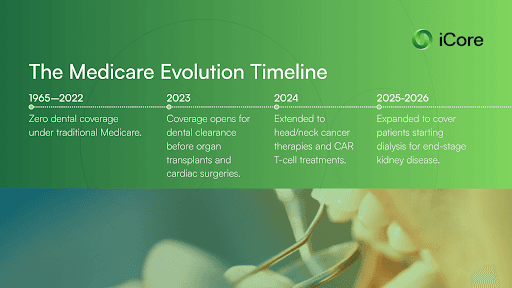
Dental and medical coverage aren't the same — but the line is blurring. Learn when dental becomes medical, how cross-billing works, and how iCore helps practices capture every reimbursement they're owed.

Dental Claims & RCM
Learn how dental billing management systems improve internal workflows, reduce claim delays, and increase practice efficiency. Discover how iCore helps practices streamline operations.
Dental Claims & RCM
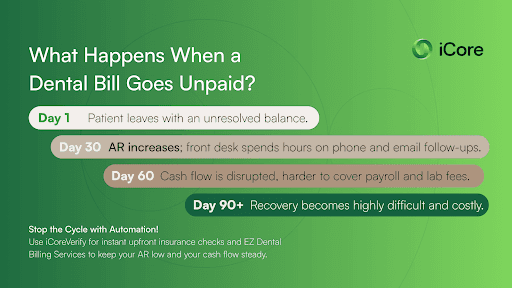
Learn when dental practices should hire billing experts and how iCore helps reduce claim denials, improve cash flow, and streamline revenue cycle management.

Dental Claims & RCM
Learn the most important dental billing laws every practice should understand. Discover compliance tips, real examples, and how iCore helps reduce claim denials and billing risks.