Dental Billing Explained: A Complete Guide for Practice Owners
Discover how dental billing works, common mistakes, and proven ways U.S. practices can reduce claim denials, improve cash flow, and increase revenue.
iCoreConnect

What Is Dental Billing? A Full Breakdown for Practice Owners

What Is Dental Billing?
At its core, dental billing is the process of submitting and following up on claims with insurance companies to receive payment for services provided.
But in reality, it’s much more than just sending claims.
It involves:
Verifying patient insurance
Coding procedures accurately (CDT codes)
Submitting claims correctly
Tracking claim status
Managing denials and rejections
Posting payments and reconciling accounts
Think of the dental billing process as the financial backbone of your practice. Without it functioning smoothly, even the best clinical work won’t translate into consistent revenue.
Why Dental Billing For Practice Owners Matter More Than You Think
Let’s go back to Dr. Emily.
After months of inconsistent cash flow, she decided to audit her billing process. What she found was eye-opening:
Claims were being submitted with missing information
Insurance verification was rushed or skipped
Denials were not being followed up
Aging reports were ignored
In just 60 days, nearly $85,000 in revenue was stuck in unpaid claims. This is not uncommon.
In the U.S., dental practices lose thousands of dollars every month due to inefficient dental billing and insurance workflows.
A strong billing system ensures:
Faster reimbursements
Fewer claim denials
Better patient experience
Predictable cash flow
The Dental Billing Process (Step-by-Step)

Let’s simplify the process into a real-world workflow.
1. Insurance Verification
Before the patient even sits in the chair, verification should be complete.
Example:
A patient walks in for a crown procedure. If your team hasn’t confirmed coverage, you risk undercharging or surprising the patient with a large bill.
Key checks:
Coverage details
Annual maximum
Deductibles
Waiting periods
Skipping this step is one of the biggest causes of revenue leakage.
2. Accurate Coding (CDT Codes)
Every procedure must be translated into standardized codes. Even a small mistake here can lead to claim rejection.
Example:
Using the wrong code for a filling vs. crown buildup can result in reduced reimbursement—or complete denial.
Accuracy here directly impacts your dental claims success rate.
3. Claim Submission
Once coding is done, claims are submitted to insurance companies. This step sounds simple—but timing and accuracy matter.
Best practices:
Submit claims within 24–48 hours
Attach required documentation (X-rays, narratives)
Double-check patient and provider details
4. Claim Tracking and Follow-Up
Here’s where many practices fall short.
Submitting a claim doesn’t mean it will be paid.
Case Scenario:
Dr. Emily’s team assumed claims would process automatically. In reality, many were sitting unreviewed for weeks.
A proactive approach includes:
Checking claim status regularly
Following up with insurance companies
Resolving pending issues quickly
This is a critical part of reducing dental claim denials.
5. Denial Management
Denials are not the end—they’re part of the process.
The key is how you handle them.
Common reasons for denials:
Missing documentation
Incorrect coding
Eligibility issues
Timely filing limits exceeded
Example:
A $2,000 implant claim gets denied due to missing X-rays. Without follow-up, that’s lost revenue. With proper resubmission, it gets approved.
Efficient denial management can recover a significant portion of lost income.
6. Payment Posting and Reconciliation
Once payments are received:
Post them accurately
Match them with claims
Identify underpayments
This step ensures your financial records are accurate and transparent.
Common Dental Billing Challenges
Even well-run practices face challenges.
Here are the most common ones:
1. Frequent Claim Denials
Often due to errors in coding or incomplete documentation.
2. Slow Insurance Payments
Delays can stretch cash flow and impact operations.
3. Lack of Skilled Staff
Dental billing process requires expertise—not just administrative effort.
4. Poor Workflow Systems
Disconnected systems lead to missed claims and inefficiencies.
A Real-Life Dental Billing Process Turnaround Story
Let’s revisit Dr. Emily.
Frustrated with inconsistent revenue, she decided to overhaul her billing system.
Here’s what she changed:
Implemented strict insurance verification protocols
Trained her team on accurate coding
Introduced weekly claim follow-ups
Outsourced part of her dental billing services
Within 3 months:
Claim approval rates increased by 30%
Accounts receivable dropped significantly
Monthly revenue became predictable
Most importantly, she could focus on patient care again—without worrying about finances.
Should You Handle Dental Billing Process In-House or Outsource?
This is a big decision for many practice owners.
In-House Billing
Pros:
Full control
Immediate communication
Cons:
Requires training
Higher risk of errors
Time-consuming
Outsourced Dental Billing Services
Pros:
Expertise and accuracy
Faster claim processing
Reduced administrative burden
Cons:
Less direct control
Requires trust in the provider
For many U.S. practices, outsourcing becomes a smart move—especially as they scale.
Best Practices to Improve Your Dental Billing Process
Whether you manage billing internally or outsource it, these tips can make a huge difference:
1. Verify Insurance Every Time
Even for returning patients—plans change.
2. Submit Clean Claims Quickly
The faster and cleaner the claim, the quicker the payment.
3. Track Everything
Use dashboards or reports to monitor:
Claim status
Denial rates
Accounts receivable
4. Follow Up Relentlessly
Don’t assume insurance companies will process everything correctly.
5. Train Your Team Regularly
Billing rules and codes change frequently.
The Future of Dental Billing
Dental billing in the U.S. is evolving.
Practices are increasingly adopting:
Automation tools
AI-driven claim analysis
Integrated practice management systems
The goal is simple:
Reduce manual work and maximize revenue efficiency.
Final Thoughts
Dental billing isn’t just an administrative task—it’s a revenue strategy.
Dr. Emily’s story is a reminder that even successful practices can struggle if their billing process isn’t optimized.
By understanding and improving your dental billing workflow, you can:
Increase collections
Reduce stress
Focus more on patient care
At the end of the day, your expertise deserves to be compensated fully—and on time.
Schedule a Free Dental Billing Audit
Struggling with delayed payments or frequent dental claim denials?
It’s time to uncover what’s holding your revenue back.
Schedule a Free Billing Audit and let our experts analyze your current dental billing process, identify gaps, and show you exactly where you’re losing money.
👉 Get actionable insights.
👉 Reduce claim denials.
👉 Improve cash flow—fast.
Book your free audit today and take control of your practice revenue.
Other articles

Dental Claims & RCM
Learn how to process dental insurance claims faster, reduce denials, and get paid consistently with this step-by-step guide from iCore.

Dental Claims & RCM
Learn what features matter most in dental medical billing software and how iCore helps dental practices reduce denials and recover more revenue.
Dental Claims & RCM
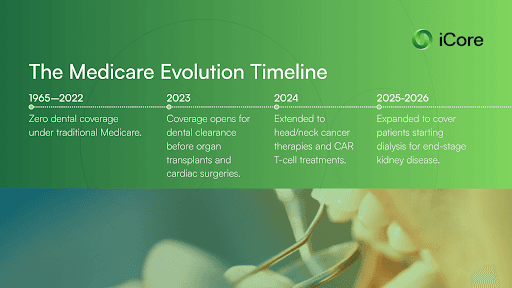
Dental and medical coverage aren't the same — but the line is blurring. Learn when dental becomes medical, how cross-billing works, and how iCore helps practices capture every reimbursement they're owed.

Dental Claims & RCM
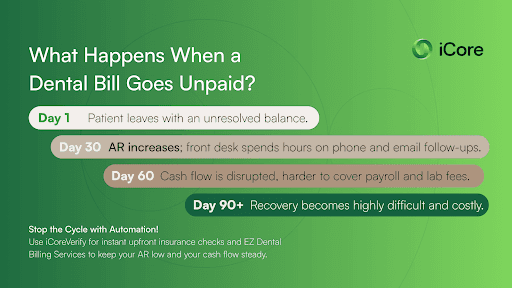
Learn how dental billing management systems improve internal workflows, reduce claim delays, and increase practice efficiency. Discover how iCore helps practices streamline operations.
Dental Claims & RCM
Learn when dental practices should hire billing experts and how iCore helps reduce claim denials, improve cash flow, and streamline revenue cycle management.

Dental Claims & RCM
Learn the most important dental billing laws every practice should understand. Discover compliance tips, real examples, and how iCore helps reduce claim denials and billing risks.