Dental Revenue Cycle Management: Strategies for Higher Collections
Learn how dental practices can improve cash flow, reduce claim denials, and streamline billing workflows with effective revenue cycle management strategies.
iCoreConnect

In today’s competitive dental landscape, clinical excellence alone is not enough to sustain profitability. U.S. dental practices must operate with the same financial discipline as any other healthcare organization. This is where dental revenue cycle management becomes critical. A well-structured revenue cycle ensures that every service performed is accurately documented, billed, reimbursed, and collected - without delays or revenue leakage.
Many practices unknowingly lose thousands of dollars each month due to inefficient workflows, claim denials, insurance verification errors, and aging accounts receivable. By implementing smarter dental RCM strategies, practices can significantly improve cash flow, reduce administrative burden, and focus more on patient care.
What is Dental Revenue Cycle Management?
Dental revenue cycle management refers to the entire financial process of a patient encounter—from scheduling and insurance verification to final payment collection. Unlike medical billing, dental RCM involves unique dental coding structures, frequent insurance limitations, and a higher reliance on patient responsibility.
The dental revenue cycle includes:
Patient scheduling and data capture
Insurance eligibility verification
Treatment planning and pre-authorizations
Accurate coding and documentation
Claim submission and tracking
Payment posting
Appeals and denial management
Patient billing and collections
Reporting and performance analysis
Each stage must function efficiently to increase revenue in dental practices and prevent bottlenecks.
Why Dental Practices Struggle With Collections
Many U.S. dental offices rely on outdated billing workflows or undertrained administrative teams. As payer rules become more complex and patients bear greater financial responsibility, inefficiencies directly impact profitability.
Common challenges include:
Incomplete insurance verification
Incorrect CDT coding
Missed pre-authorizations
Delayed claim submission
High denial rates
Poor follow-up on unpaid claims
Lack of patient financial communication
No tracking of KPIs or aging reports
Without proactive dental billing and insurance workflow management, revenue loss becomes inevitable.

Strategy 1: Verify Insurance Eligibility Before Every Visit
Insurance verification is the foundation of successful dental revenue cycle management. Many practices verify coverage only once, assuming it remains unchanged. However, plan limitations, frequencies, and downgrades change frequently across many dental insurance plans according to the National Association of Dental Plans.
Best practices include:
Verifying eligibility 48 hours before appointments
Confirming annual maximums and remaining benefits
Checking frequency limitations (e.g., crowns, SRP, exams)
Identifying downgrades and exclusions
Documenting details in the PMS for clinical and billing teams
Proper verification prevents surprises that delay payment and helps improve dental collections at the time of service.
Strategy 2: Present Clear Financial Estimates to Patients
Today’s dental patients expect transparency. With high deductibles and co-pays, patients want to understand costs before treatment begins.
A strong financial presentation:
Builds trust and reduces cancellations
Increases case acceptance
Ensures upfront collections
Minimizes post-treatment billing confusion
Practices that communicate financial responsibility early see measurable improvements in improving dental collections because patients are prepared to pay their portion immediately.
Strategy 3: Submit Clean Claims Within 24 Hours
Timely claim submission is essential to maintaining cash flow and complying with healthcare billing standards outlined by Centers for Medicare & Medicaid Services.
To optimize dental billing and insurance workflow:
Submit claims within 24 hours of treatment
Include clinical narratives and attachments when required
Use correct CDT coding with detailed documentation
Ensure digital radiographs meet payer standards
Validate claims before submission to avoid rejections
Clean claims reduce rework and accelerate reimbursements—key to increase revenue in dental practices.
Strategy 4: Focus on Denial Prevention, Not Just Appeals
Many dental teams spend time reacting to denials rather than preventing them. A proactive approach helps reduce dental claim denials and saves administrative hours.
Top causes of denials include:
Missing documentation
Frequency conflicts
Incorrect patient eligibility
Lack of pre-authorization
Coding mismatches
Practices should track denial trends monthly and train staff to correct root causes. Preventing denials is far more profitable than chasing payments later.
Strategy 5: Implement a Structured A/R Follow-Up System
Accounts receivable aging is one of the most overlooked areas in dental revenue cycle management. Many practices allow claims to sit unpaid for 60–90 days without follow-up.
A disciplined A/R process should include:
Weekly insurance aging review
Follow-up on claims older than 15 days
Escalation workflows for stalled claims
Documentation of payer conversations
Refiling or correcting claims promptly
Healthy practices maintain insurance A/R under 30 days—an essential benchmark to improve dental collections.
Strategy 6: Collect Patient Responsibility at the Time of Service
With insurance covering a smaller portion of care, patient collections now represent a significant share of practice revenue.
To support stronger dental RCM strategies, practices should:
Collect estimated co-pays before treatment
Offer convenient payment methods
Provide financing options for larger cases
Train front desk teams to confidently discuss payments
Avoid sending small balances to statements
Point-of-service collections dramatically increase revenue in dental practices while reducing billing costs.
Strategy 7: Standardize Documentation to Support Claims
Incomplete clinical documentation is a hidden driver of reimbursement delays. Insurance carriers increasingly require justification for procedures.
To reduce dental claim denials, ensure:
Periodontal charting is updated and complete
Narratives explain medical necessity clearly
Radiographs support the diagnosis
Intraoral images are included when appropriate
Templates are standardized across providers
Strong documentation protects revenue and minimizes audit risks.
Strategy 8: Use Data to Drive Financial Performance
Successful dental revenue cycle management is data-driven, a principle widely emphasized by the Healthcare Financial Management Association.
Key metrics to track:
Net collection rate (goal: 98%+)
Days in A/R (goal: under 30 days)
Claim denial rate (goal: under 5%)
Case acceptance rate
Production vs. collections ratio
Patient balance aging
Analyzing these indicators helps leadership refine dental RCM strategies and sustain long-term growth.
Strategy 9: Train Administrative Teams as Revenue Specialists
Front office staff are no longer just schedulers—they are financial coordinators who directly influence practice profitability.
Training should include:
Insurance interpretation skills
Coding accuracy
Financial communication techniques
Claim troubleshooting
Understanding payer behavior
Compliance awareness
Investing in staff education strengthens the entire dental billing and insurance workflow.
Strategy 10: Consider Outsourcing Complex RCM Functions
Many U.S. dental practices are now outsourcing parts of their revenue cycle to specialists who focus exclusively on billing, verification, and A/R recovery.
Outsourcing can help:
Reduce administrative overhead
Accelerate collections
Improve claim accuracy
Provide scalable billing support
Allow teams to focus on patient care
When implemented correctly, outsourcing enhances dental revenue cycle management without disrupting operations.
The Financial Impact of Optimized Dental RCM
Practices that adopt structured dental RCM strategies often see:
15–25% faster reimbursements
Significant reduction in denied claims
Increased upfront collections
Lower administrative costs
Improved patient satisfaction
Predictable monthly cash flow
In an environment where operational costs continue rising, efficient revenue management is no longer optional—it is essential to increase revenue in dental practices.
Final Thoughts
The future of dentistry in the United States is increasingly tied to operational efficiency as much as clinical expertise. Practices that master dental revenue cycle management gain a competitive advantage by transforming administrative processes into consistent, revenue-generating systems.
By strengthening insurance verification, streamlining dental billing and insurance workflow, proactively working to reduce dental claim denials, and implementing proven methods to improve dental collections, dental organizations can build a financially resilient practice model that supports both growth and patient satisfaction.
A well-managed revenue cycle doesn’t just improve profitability—it empowers practices to invest in new technology, expand clinical services, and deliver a higher standard of care.
Take the Next Step Toward Optimizing Your Revenue Cycle
Ready to identify hidden revenue opportunities in your practice?
Audit your last 90 days of claims to uncover missed reimbursements and process gaps.
Calculate your true net collection rate and benchmark your financial performance.
Schedule a revenue cycle assessment with our experts to build a stronger, more predictable cash flow.
Start turning operational efficiency into measurable financial success today. Contact Us now for a free consultation.
Other articles

Dental Claims & RCM
Learn how to process dental insurance claims faster, reduce denials, and get paid consistently with this step-by-step guide from iCore.

Dental Claims & RCM
Learn what features matter most in dental medical billing software and how iCore helps dental practices reduce denials and recover more revenue.
Dental Claims & RCM
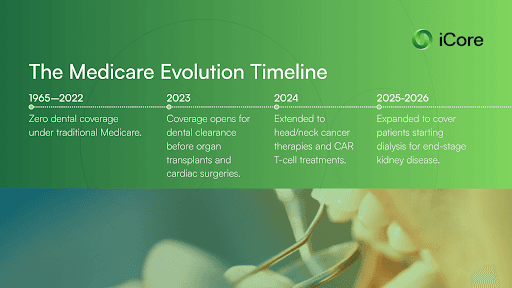
Dental and medical coverage aren't the same — but the line is blurring. Learn when dental becomes medical, how cross-billing works, and how iCore helps practices capture every reimbursement they're owed.

Dental Claims & RCM
Learn how dental billing management systems improve internal workflows, reduce claim delays, and increase practice efficiency. Discover how iCore helps practices streamline operations.
Dental Claims & RCM
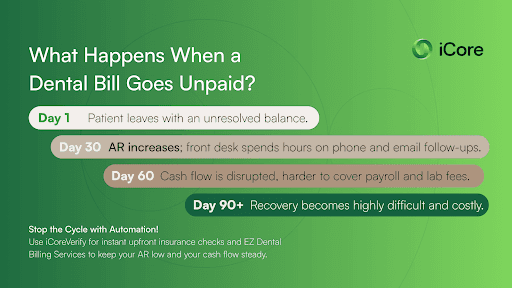
Learn when dental practices should hire billing experts and how iCore helps reduce claim denials, improve cash flow, and streamline revenue cycle management.

Dental Claims & RCM
Learn the most important dental billing laws every practice should understand. Discover compliance tips, real examples, and how iCore helps reduce claim denials and billing risks.